
Home Buying Basics

Prequalified or Preapproved? Understanding the Difference Before You Shop for a Home

Before you start touring homes, it's important to understand the difference between mortgage prequalification and preapproval—and why one carries more weight with sellers.

Prequalified vs preapproved mortgage guide for Kings Bay home buyers

Many first-time buyers hear the terms prequalified and preapproved used interchangeably, but they represent two very different steps in the mortgage process—and knowing the difference can make your home search much smoother.

Before you start touring homes or submitting offers, it helps to understand where you stand financially. Two of the most common early steps in the mortgage process are prequalification and preapproval. While they may sound similar, they serve different purposes and carry different levels of credibility when you're making an offer on a home.

For many first-time buyers—and especially military families relocating to areas like Kingsland, St. Marys, or Camden County near Kings Bay Naval Submarine Base—understanding this difference can help you move faster and with more confidence. In competitive housing markets, sellers often want reassurance that a buyer is financially prepared to close the deal.

What Is Mortgage Prequalification?

Mortgage prequalification is typically the first step buyers take when exploring their financing options. It's a quick review of your financial situation that helps estimate how much home you may be able to afford. This process usually involves answering a few questions about your income, debts, and credit profile, often through a short online form or brief conversation with a loan officer.

Because prequalification relies largely on self-reported information rather than verified documentation, it's considered an informal estimate rather than a firm approval. That doesn't make it useless—it's actually a helpful starting point—but it doesn't carry the same weight as a full preapproval when making an offer.

  • Quick financial estimate: Prequalification gives you a general idea of your potential loan amount and monthly payment range.
  • Minimal documentation: Most prequalifications don't require tax returns, pay stubs, or bank statements.
  • Early planning tool: It helps first-time buyers understand their price range before seriously shopping for homes.

Many buyers use prequalification to begin their home search or to start conversations with lenders about loan programs, down payment assistance, or VA loan eligibility. I can help you get pre-qualified today — it just takes a quick call or application review.

What Is a Mortgage Preapproval? (And Why It Often Makes the Most Sense!)

A mortgage preapproval is a more detailed and verified review of your finances. Instead of relying only on estimates, a lender reviews documentation such as income statements, employment history, credit reports, and asset information. The goal is to determine how much you are likely to qualify for based on verified financial data. My goal is to gather as much info up-front as I can and then submit for our first round of underwriting as quickly as possible. The path to a smooth closing is laid through early preparation!

Once the review is complete, the lender typically issues a preapproval letter. This letter confirms that your finances have been evaluated and that you appear qualified for a mortgage up to a certain amount, subject to final underwriting and property approval.

Why Preapproval Matters

Preapproval gives you a clearer picture of your buying power and strengthens your position when making offers. Real estate agents and sellers often prefer working with preapproved buyers because it shows that financing has already been reviewed by a lender.

This step can be especially valuable for military families relocating to the area through PCS orders. Buyers moving to communities near Kings Bay Naval Submarine Base often start touring homes soon after arriving, and having a preapproval letter ready can make the process far smoother when the right home appears.
Key Differences Between Prequalification and Preapproval

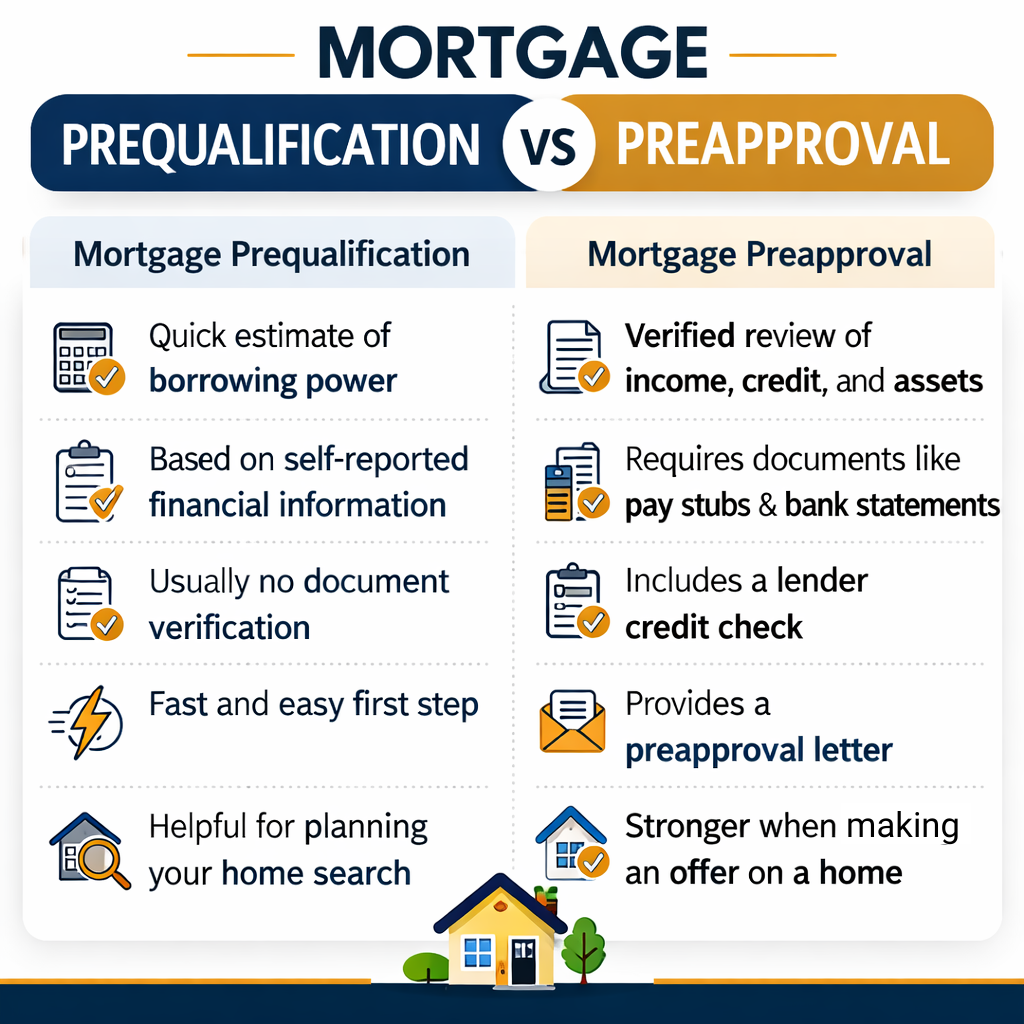
The main difference between prequalification and preapproval comes down to verification. Prequalification is an estimate based on information you provide, while preapproval involves a lender reviewing documents and confirming your financial picture.

This distinction matters when you begin making offers on homes. In many cases, sellers want reassurance that a buyer has already taken the time to verify their financing.

Side-by-side comparison of mortgage prequalification versus preapproval: what each requires, how long it takes, and what sellers think

How the Two Steps Compare

Prequalification is faster and simpler, but it carries less authority. Preapproval takes a bit more time because it requires documentation, but it provides stronger credibility with sellers and real estate agents. Preapproval also gives buyers more confidence in their budget because the numbers have been reviewed more carefully.

For buyers planning to move to the Camden County area, especially around Kingsland or St. Marys, starting with prequalification and then moving quickly to preapproval is a common and practical approach.

Why Sellers Often Prefer a Preapproval Letter

When a seller reviews multiple offers on a property, they want to know the buyer can realistically close the deal. A preapproval letter helps provide that confidence. It shows that a lender has already evaluated your credit, income, and financial documents.

From a seller's perspective, this reduces uncertainty. Offers from preapproved buyers are often taken more seriously because the financing process has already begun. In competitive markets, this can make a meaningful difference.

Buyers relocating to Camden County or the Kings Bay area frequently benefit from having preapproval ready before touring homes. Properties near the base can move quickly, and being prepared allows you to make a strong offer when you find the right home.

If you're eligible for a VA loan, reviewing resources like the Free VA Loan Guide can also help you understand your options before starting the preapproval process.

Frequently Asked Questions

What information is needed for a mortgage prequalification?

Prequalification usually requires basic financial details such as your estimated income, current debts, employment status, and credit score range. Because the information is typically self-reported, documentation is often not required at this stage.

How long does a mortgage preapproval last?

Most mortgage preapproval letters are valid for about 60 to 90 days. If your home search takes longer than that, your lender may need to update financial documents or run a new credit check to refresh the approval.

Does getting preapproved affect your credit score?

A mortgage preapproval usually involves a hard credit inquiry, which may cause a small temporary change in your credit score. However, this impact is typically minor and is considered a normal part of the homebuying process.

Should you get preapproved before touring homes?

Yes. Getting preapproved before touring homes can help you focus on properties within your budget and makes it easier to submit a strong offer quickly if you find the right home.

Key Takeaways

  • Prequalification is a quick estimate of how much you may be able to borrow based on basic financial information.
  • Preapproval involves verifying your income, credit, and assets to determine a more accurate loan amount.
  • Sellers often view preapproved buyers as more serious and financially prepared.
  • Military families relocating to areas like Kingsland, St. Marys, or Camden County often benefit from getting preapproved before starting their home search.

Related Articles

Ready to Start Your Homebuying Journey?

If you're thinking about buying a home in Camden County or near Kings Bay Naval Submarine Base, getting prequalified or preapproved is a great first step.

Call or text: (912) 270-5172

Download the Free VA Loan Guide →

Loan programs, eligibility requirements, interest rates, and closing costs vary based on individual circumstances, credit profile, property type, and market conditions. Every mortgage scenario should be reviewed on a case-by-case basis.